Pale pink weeping cherry blossoms swaying in the spring breeze. "Mito Daishi Rokujizo-ji," located at Mito City, has long been known as a temple of flowers.
The temple grounds were bustling with visitors as the weeping cherry blossoms reached their peak.
With locals taking strolls and others snapping photos, a peaceful atmosphere filled the air. The scenery of towering trees lined with cherry blossoms offered a unique springtime comfort—simply walking through it brought a sense of calm.
Founded in 807 — An ancient temple with over 1,200 years of history
Mito Daishi Rokujizo-ji is a historic temple founded in 807. As an ancient temple with a history spanning over 1,200 years, it has been cherished not only by local residents but also by visitors from outside the prefecture.
The temple preserves over 3,000 cultural assets, the largest number within the Ibaraki Prefecture area. The numerous treasures passed down through its long history are still carefully safeguarded here today.
An Approach Path Greeted by a 1,100-Year-Old Giant Cedar and an 800-Year-Old Giant Ginkgo
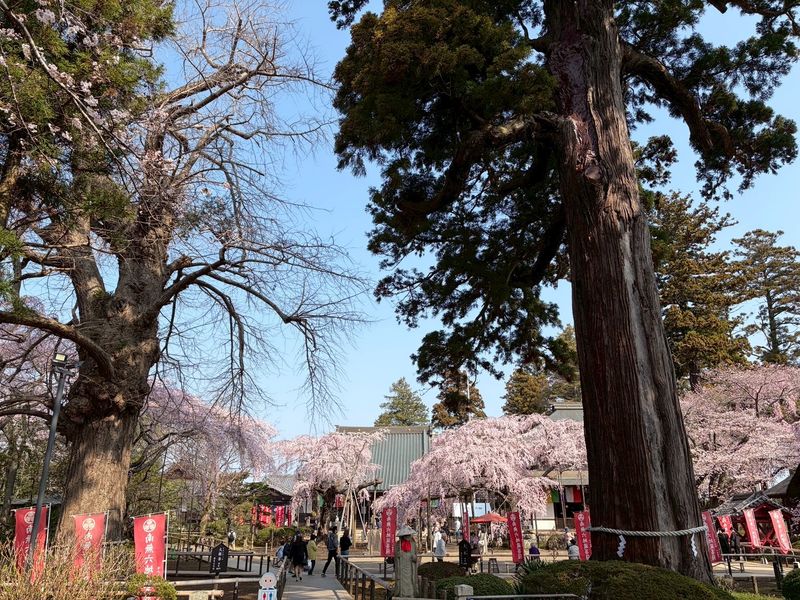
At the entrance to the approach, a massive 1,100-year-old cedar and an 800-year-old ginkgo tree tower overhead, quietly watching over visitors. Passing between these giant trees, a row of cherry trees leading to the temple grounds spreads out, bathed in the light of spring
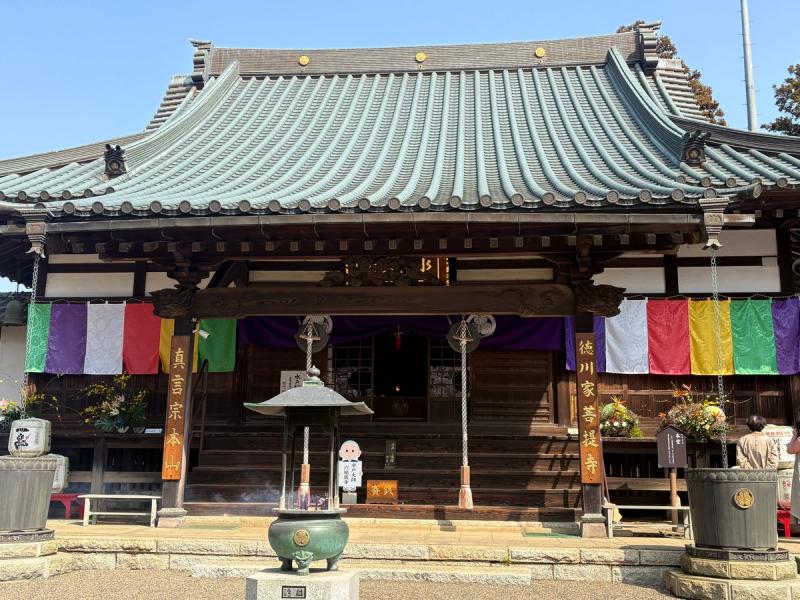
The main hall of Rokujizō-ji, with its fluttering five-colored curtains
Standing before the main hall, the colors of the cherry blossoms blended with the temple’s serene presence, creating a scene so captivating that I couldn’t help but stop in my tracks.
About Rokujizo-ji Temple | The "Flower Temple" Fondly Known as Mito Daishi
Rokujizo-ji is a Shingon Buddhist temple located in Rokutanda-cho, Mito City, and is affectionately known as “Mito Daishi.”
Long protected by the Mito Tokugawa family and successive feudal lords, the temple grounds feature weeping cherry trees associated with Lord Mitsukuni, as well as flowers blooming throughout the four seasons. Known for its beauty as the “Temple of Flowers,” it has been selected as one of the “100 Scenic Views of Ibaraki.”
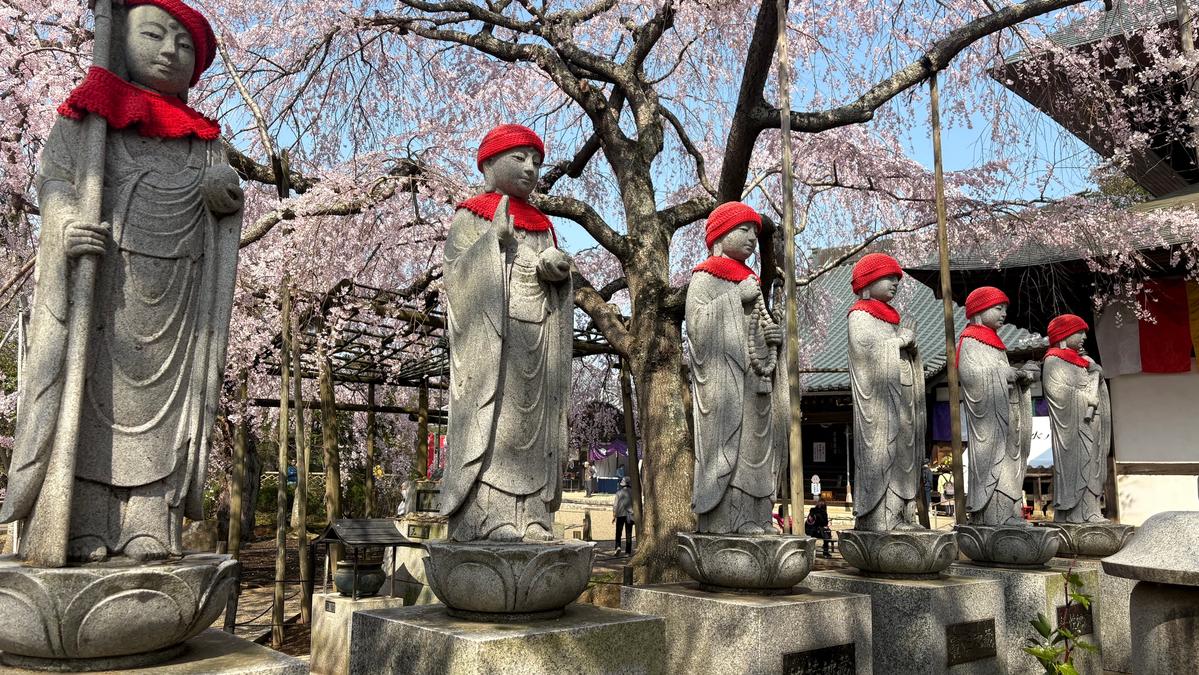
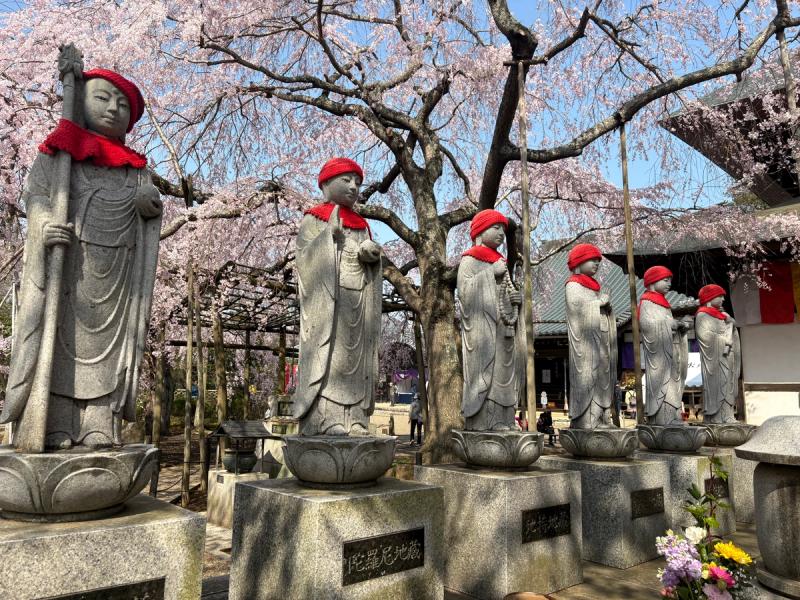
The Six Jizo, a row of six Jizo Bodhisattva statues, are revered as guardians of the Six Realms: Hell, Hungry Ghosts, Animals, Asuras, Humans, and Heaven. During cherry blossom season, the red hats and aprons of the Jizo statues contrast beautifully with the blossoms, creating a quintessential spring scene.
The Star of Spring: The Weeping Cherry Tree Associated with Lord Mitsukuni, Covering the Temple Grounds
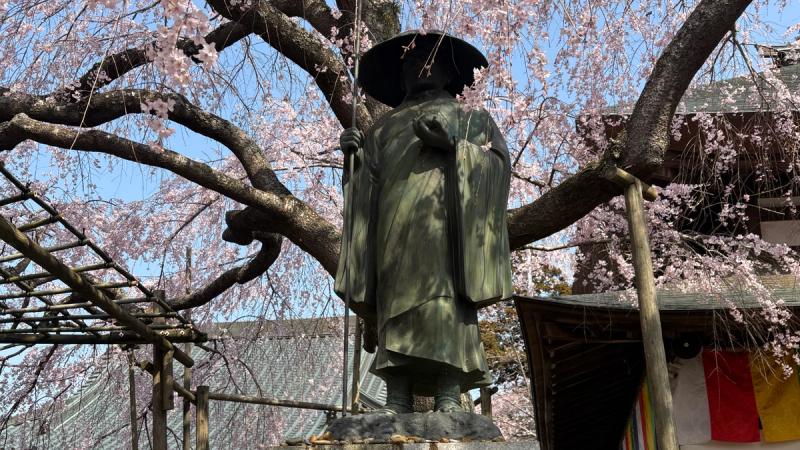
The star of spring at Rokujizo-ji Temple is the weeping cherry blossoms that bloom as if to cover the entire temple grounds.
Large cherry trees stand in front of the main hall and along the approach, and the sight of the blossoms cascading like a waterfall is truly magnificent. As a tourist spot, it is relatively uncrowded, making it a charming place to stroll leisurely and take photos.
Historic Structures Housing Nationally Designated Important Cultural Properties
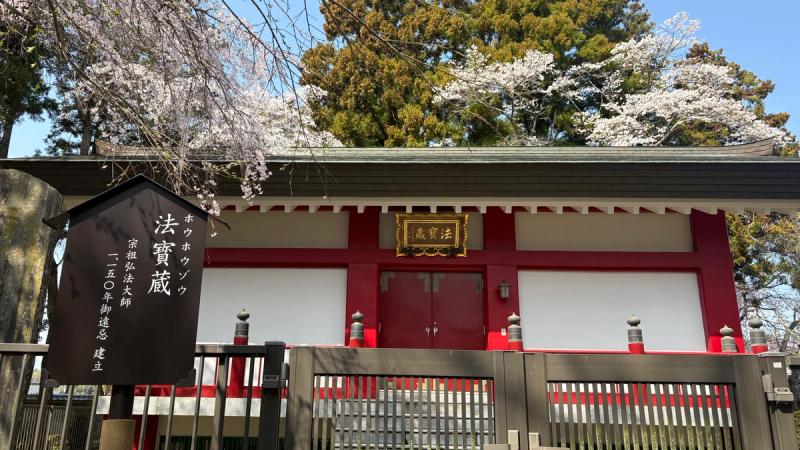
Several historic structures remain on the grounds, and some of them house National Important Cultural Properties and Prefectural Important Cultural Properties.
Access & Basic Information for Mito Daishi Rokujizo-ji Temple
- Address: 767 Rokutanda-cho, Ibaraki PrefectureMito City
- Parking: Available
- Best Time to View Cherry Blossoms: Typically late March to mid-April
- Access: About an 8-minute drive from JR Mito Station
A Historical Journey Combined with Mito Sightseeing
Mito Daishi Rokujizo-ji Temple is ideally located for visiting alongside other attractions within Mito City. By combining it with Mito’s major tourist spots such as Kairakuen Garden (home to the Plum Blossom Festival in spring), Joban Shrine, and the Tokugawa Museum, you can plan a one-day itinerary to fully experience Mito’s history and culture.
During the peak season for weeping cherry blossoms in spring (typically late March to early April), visiting slightly later than the plum blossom season at Kairakuen Garden and the Kodo-kan allows you to enjoy Mito’s spring scenery with both cherry and plum blossoms. Numerous annual events and memorial services are held throughout the year, and depending on when you visit, you may have the opportunity to experience a solemn and reverent atmosphere.