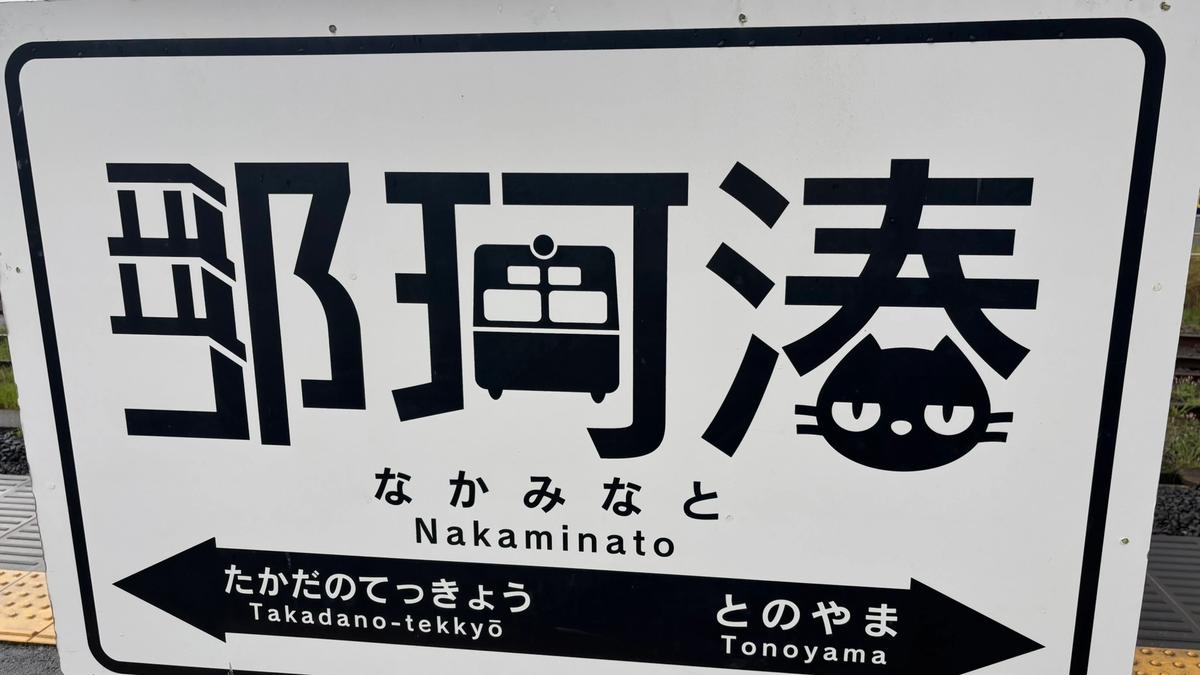
The “Hitachinaka Kaihin Railway” is a railway line connecting Hitachinaka City, Ibaraki on the JR Joban Line and Katsuta Station to Ajigaura (Ajigaura) Station along the Pacific coast, with all stations located within Hitachinaka City.The station name signs on the Hitachinaka Seaside Railway feature depictions of the history, culture, and local specialties of the areas surrounding each station. Riding the train and observing these signs offers a deeper understanding of Hitachinaka.
The Hitachinaka Kaihin Railway Minato Line Route and All 11 Stations
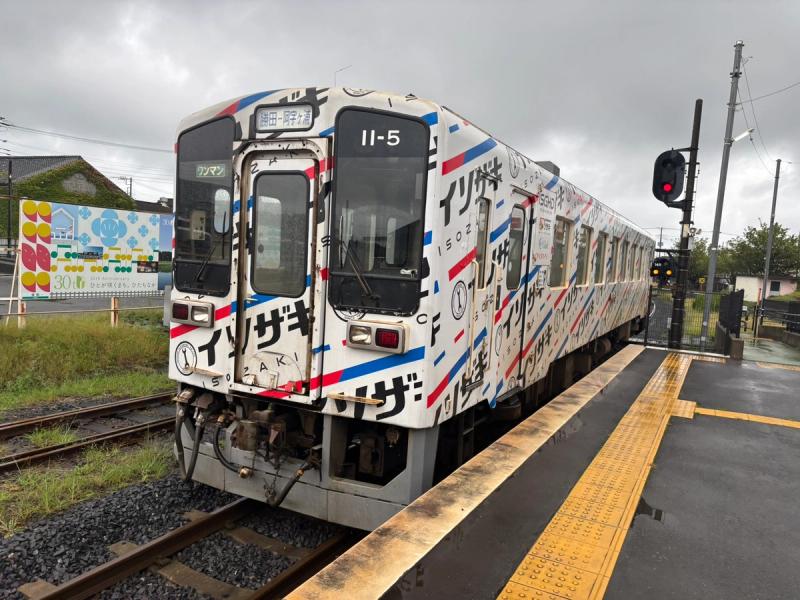
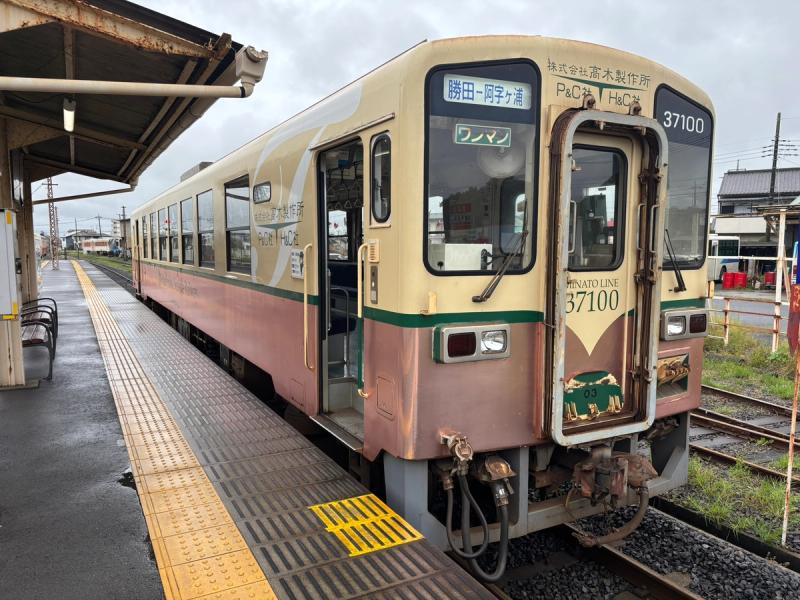
The Hitachinaka Kaihin Railway Minato Line runs from the JR Joban Line at Hitachinaka City and Katsuta Station through Koki-mae Station, Kaneage Station, Nakane Station, Takada no Tetsubashi Station,Nakaminato (Nakamina) Station, then on to Tonosan Station, Hiraiso Station, Minohama Gakuen Station, Isozaki Station, and Ajigaura (Ajigaura) Station.With a total length of 14.3 km, the train covers all 11 stations in approximately 28 minutes.
The Minato Line’s station name signs, winners of the Good Design Award
Station name signs are informational signs indicating the station name, installed on platforms or walls at railway stations. All of the Minato Line’s station name signs feature colorful designs.In fact, they are works of art created as part of the contemporary art project “Minato Media Museum” (hereinafter MMM). The Minato Media Museum is a small, community-based art festival held primarily in the Hitachinaka City, Ibaraki and Nakaminato districts.
This station name sign project won the Good Design Award in 2015.
Reference: Minato Media Museum
Katsuta Station
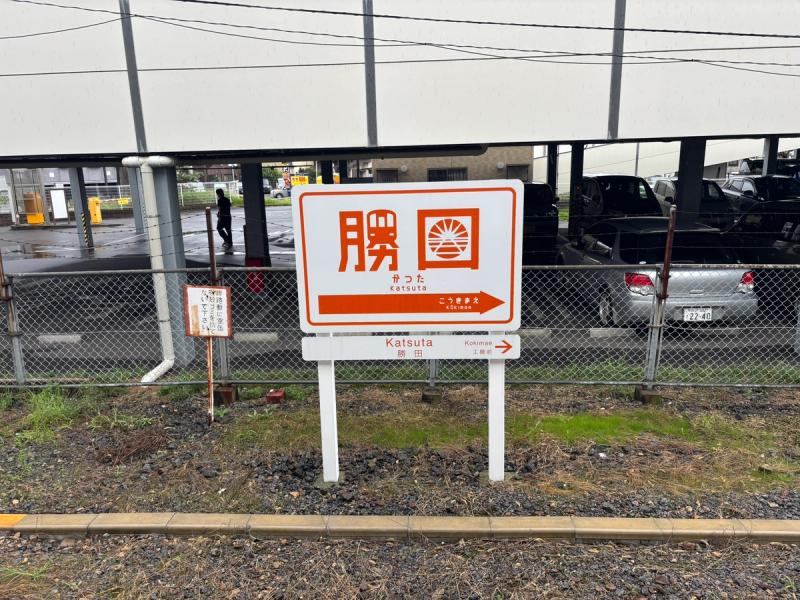
This is the starting station of the Minato Line, which connects to the JR Joban Line. It is painted orange—the symbolic color of the Hitachinaka Kaihin Railway—and features illustrations of the trains and the company’s logo. You can access Platform 1 of the Minato Line directly without exiting the ticket gates.
Koki-mae Station
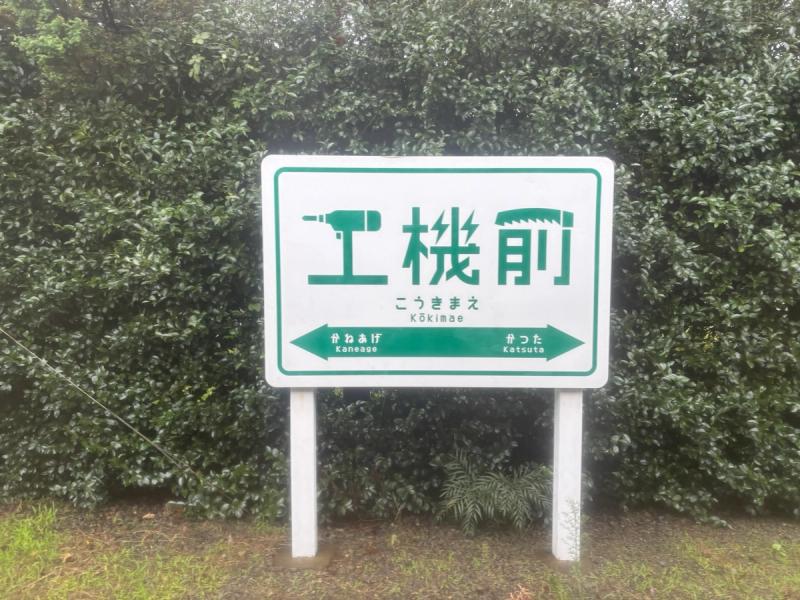
The station name sign at Koki-mae Station features a subdued green color scheme and depicts a power tool impact driver and a saber saw (electric saw). The character “機” (ki) also incorporates an electrical symbol into its design.Koki-mae Station was originally a private station for Hitachi Koki (as it was known at the time), but it opened to the general public on December 8, 1998 (Heisei 10).
Kanagami Station
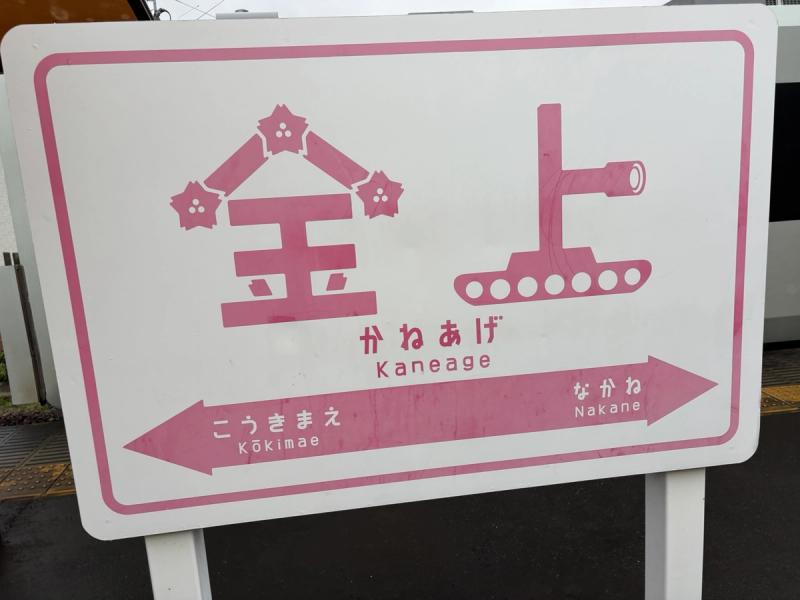
The station sign is cherry blossom pink. Since the Japan Ground Self-Defense Force Katsuta Garrison, located near Kaneage Station, is also a famous cherry blossom viewing spot, the sign features illustrations of cherry blossoms and special vehicles (tanks).The section between Katsuta and Kaneage is considered an auspicious route because the route name “Katsuta (katta) → Kaneage” can be read as “you’ve won” or “your financial fortune will rise.”Special “Lucky Tickets” are sold at Katsuta Station and Nakaminato stations.
Nakane Station
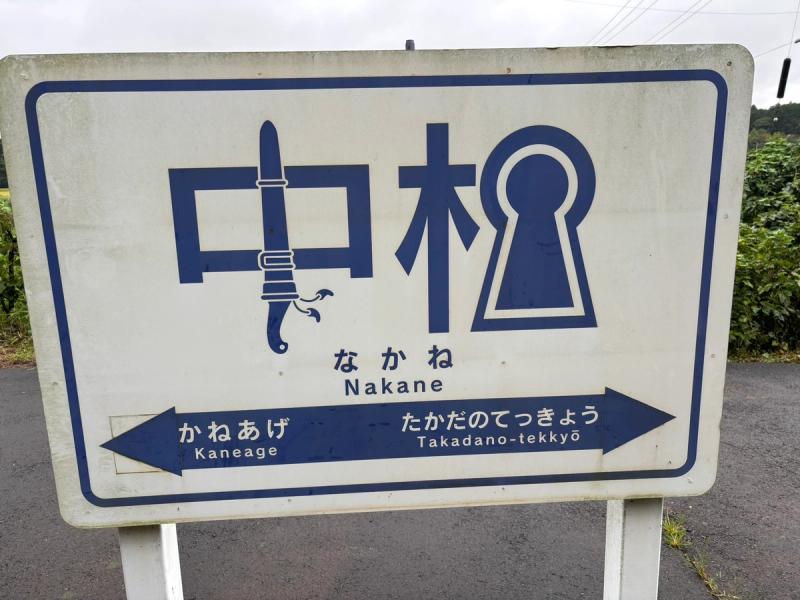
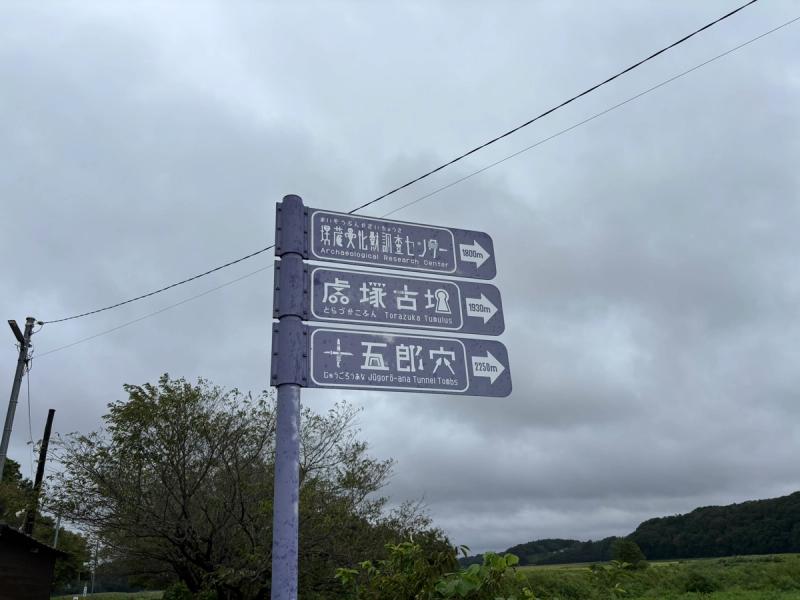
In honor of the Torazuka Kofun, a burial mound constructed in the early 7th century, a spear and a keyhole-shaped burial mound are depicted in indigo blue. Known for its retro atmosphere, it is considered one of the “hidden gem stations.”There are many signs near Nakane Station guiding visitors to historical sites such as shell mounds and burial mounds, making it a great spot for history buffs.
Takada Railway Bridge Station
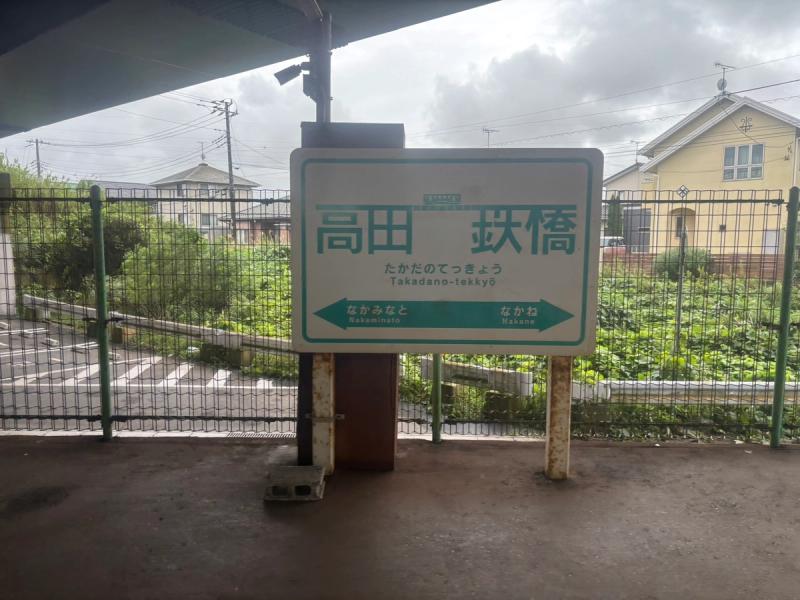
The sign is painted in a bright shade of green, depicting “Takada” and “Tetsubashi” as the two banks, with a train crossing between them via a railway bridge. This unstaffed station opened on October 1, 2014 (Heisei 26), in response to requests from the local community.It occupies a unique location, running directly beneath the elevated section of National Route 245.
Nakaminato Station
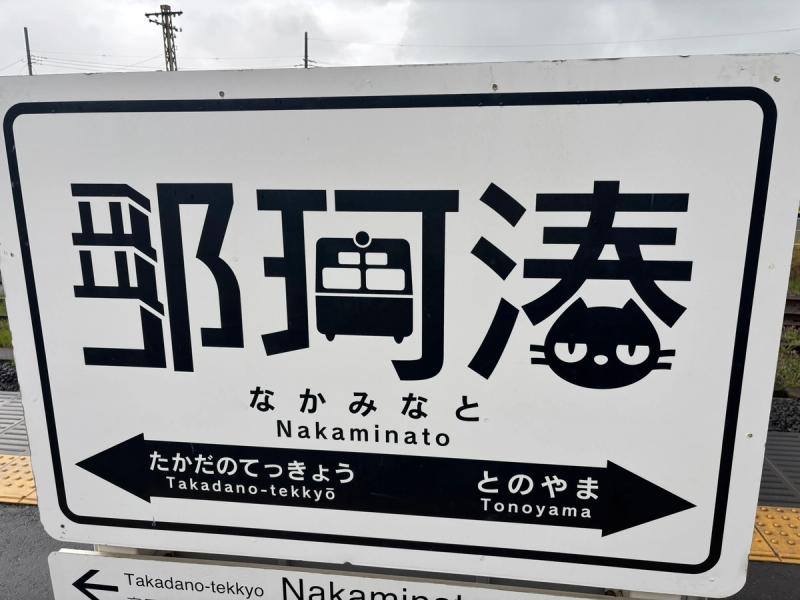
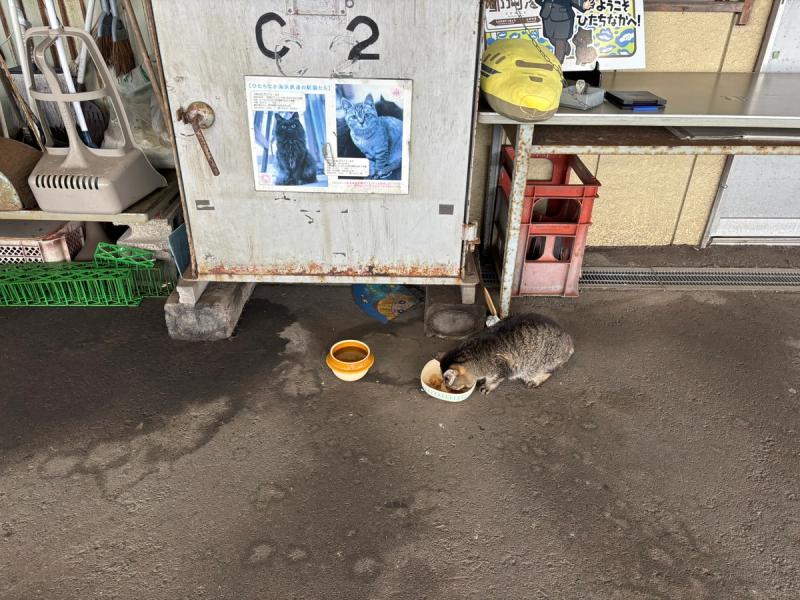
Painted black, the station features a “reflecting furnace” on the left—built during the Bakumatsu period for casting cannons—Japan’s first stainless-steel diesel railcar, the “Keha 601,” in the center, and the station’s mascot, “Eki-Neko,” on the right.The reverberatory furnace is about a 10-minute walk from the station. When the author visited, Mini Osamu-chan, the station cat, was eating his meal. How cute!
Tono-yama Station
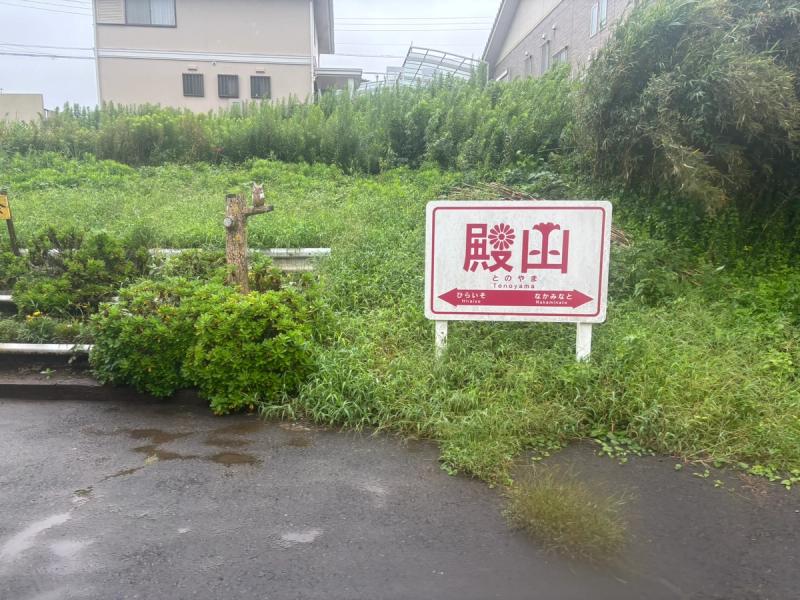
The two flowers representing Hitachinaka City—"Hamagiku" and "Keitou"—are depicted in brown. On the platform, an owl monument commemorating the now-closed Nakaminato Second High School is on display.Although it’s only open during the summer, there’s the “Uba no Futokoro Marine Pool.” It’s a rare pool in Japan that utilizes the tides.
Hiraiso Station
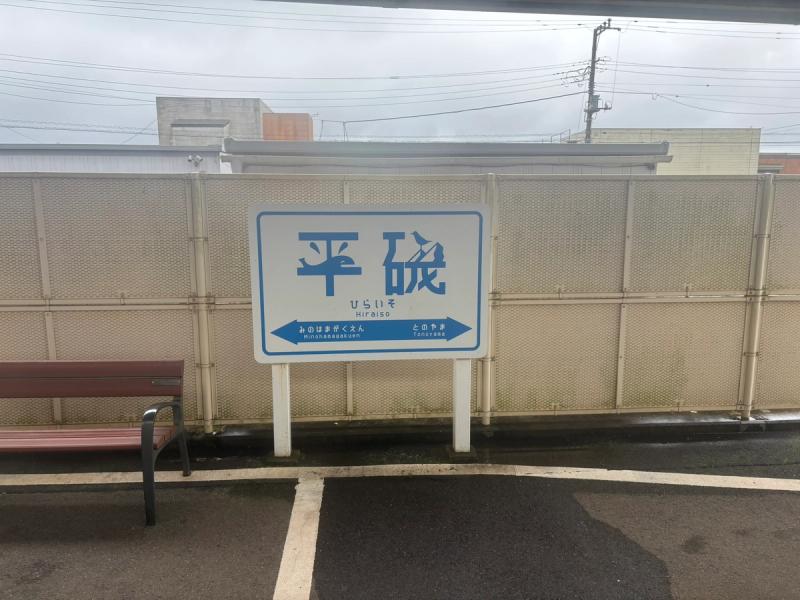
Painted in a blue reminiscent of the sea, the “Hira” (plain) section features “Daichan the Whale,” the symbol of Hiraiso Beach. In reference to the Hiraiso coast, which serves as a migratory route for birds, migratory birds gathering on the “Iso” (rocky shore) are depicted.The Hiraiso Coast features a beach and the Hiraiso Cretaceous strata, offering opportunities to enjoy seaside sightseeing. The beach is a popular spot for families with children.
Minohama Gakuen Station
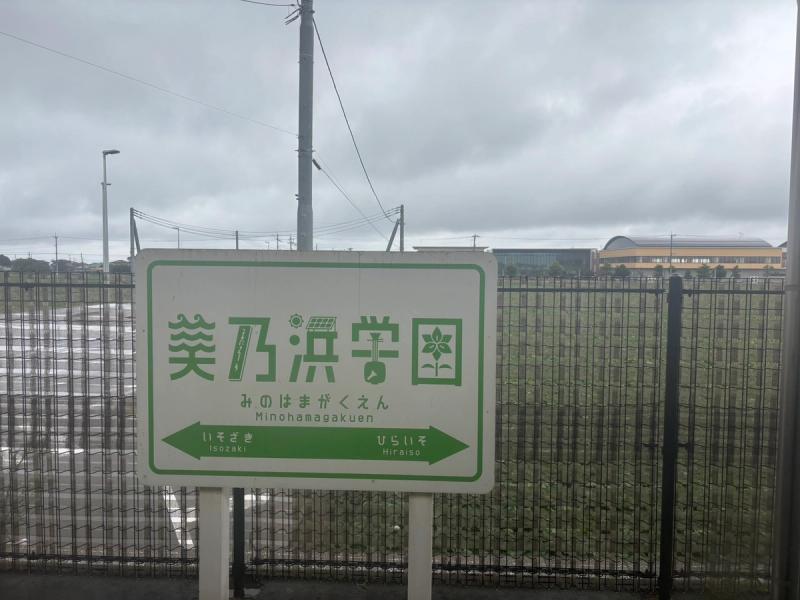
The sign features a light green color and depicts the beautiful ocean, a waka poem from the *Man’yōshū* (the source of the school’s name), and the solar panels on the school’s rooftop. The design also includes a shamisen—a reference to the local folk song “Iso-bushi”—and the *Sukashiyuri* lily, which grows wild on the nearby coast.Hitachinaka City This is the newest station, which opened on March 13, 2021 (Reiwa 3), serving as the access station for the Minohama Gakuen integrated elementary and junior high school. Minohama Gakuen is visible from the station platform.
Isozaki Station
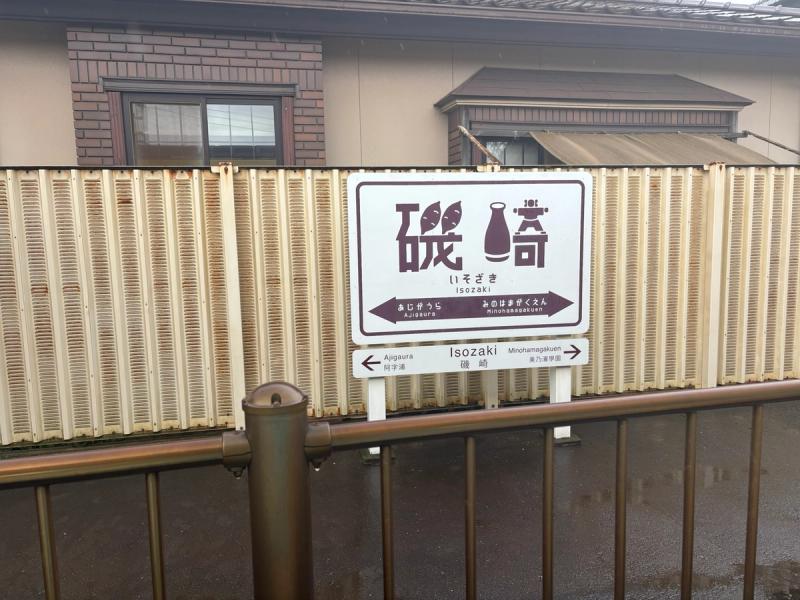
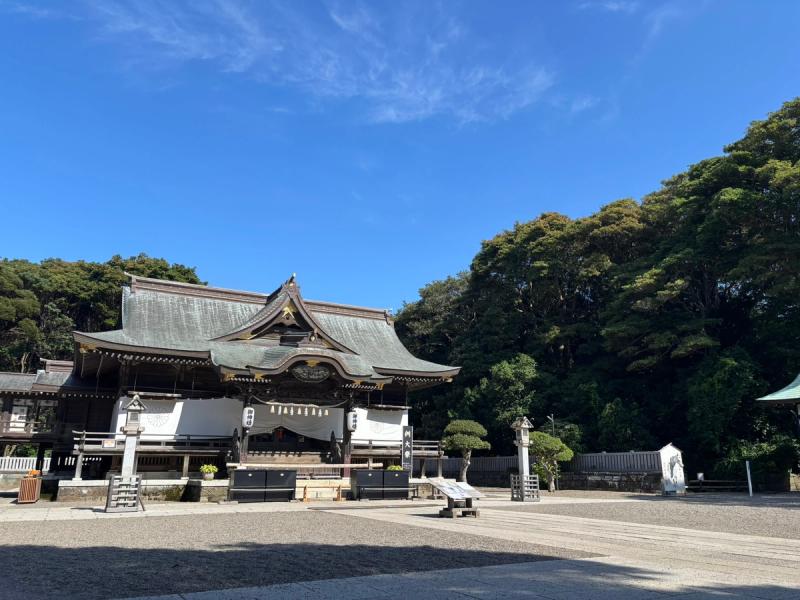
The design features a purple color scheme, and the character “Iso” is depicted using sweet potatoes from the fields that stretch out near Isozaki Station.The character “Saki” represents Prince Sukunahikona, who is enshrined at Sakatsura Isosaki Shrine (Sakatsura Isozaki Shrine). You can walk through the sweet potato fields to visit Sakatsura Isosaki Shrine in about 12 minutes.
Ajigaura Station
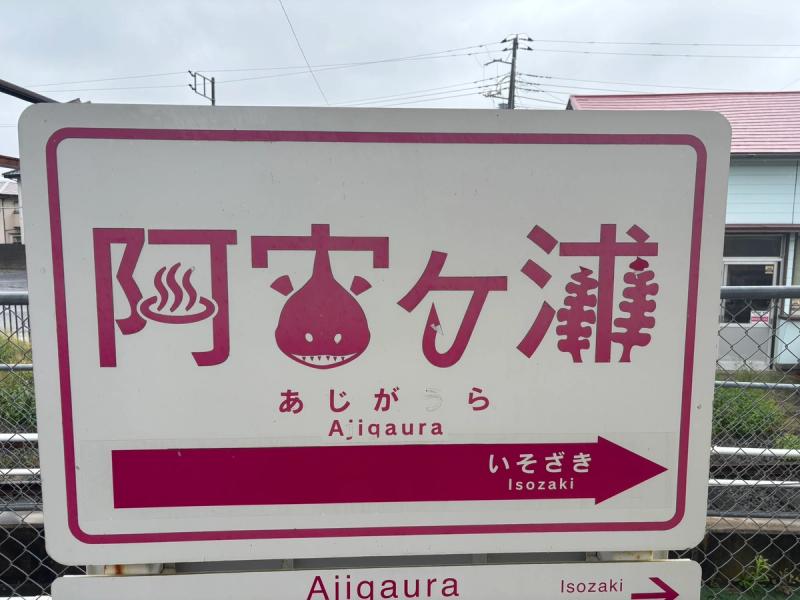
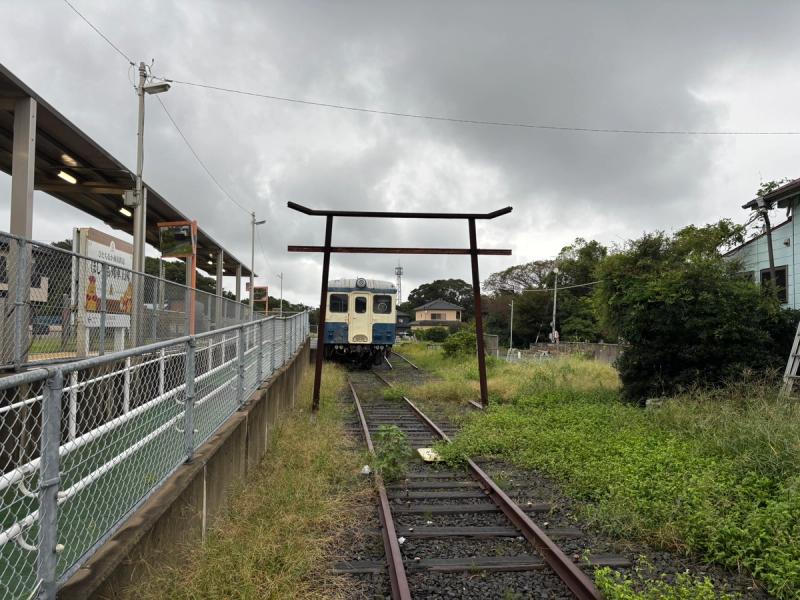
Depicted in blue are a nearby hot spring, a fishing hook, seaweed, and monkfish—a signature ingredient in the hot pot dishes of Ibaraki Prefecture.On the premises is the “Hitachinaka Kaiun Railway Shrine,” where a train is enshrined as the divine object. You can really feel the history in the torii gate made of railroad tracks. Nearby is the Ajigaura Beach, featuring a beautiful, gently sloping shoreline.
Summary
In this article, we introduced the Hitachinaka Kaihin Railway Minato Line, which features unique station name signs.
Each station’s name sign features a unique color and motif, with designs inspired by the line’s history, culture, and local specialties.
Learning the meanings behind the motifs depicted on the station name signs will deepen your understanding of the local area.
Why not take a short trip on the Hitachinaka Kaihin Railway Minato Line and enjoy the station name signs?