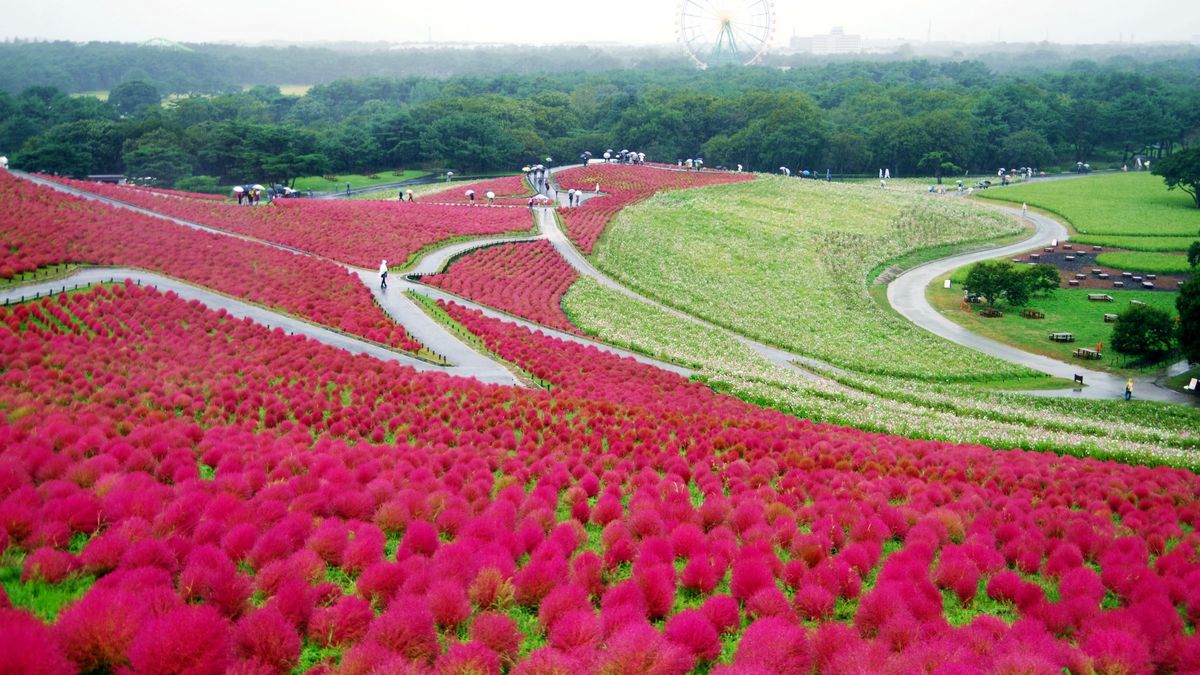
In 2026, Kochia is expected to see the “start of fall foliage” on September 30, with the “peak viewing period” occurring around October 10 (official announcement as of October 2).This year, marking the 20th anniversary of the plantings, the layout has been redesigned to extend from “Miharashi no Sato” at the base of the hill all the way to the summit.In this article, a local resident provides a comprehensive guide based on the official fall foliage forecast and daily crowd forecast calendar—covering the best days to visit, how to avoid traffic during peak foliage, the Minato Line and free shuttle buses, fall attire and essentials, and recommended lodging areas.
Stunning Autumn Views! The Charm of Kochia, Drenched in Crimson
When it comes to Hitachi Seaside Park in Hitachinaka City, Ibaraki, the blue Nemophila in spring is famous, but the autumn foliage at Kochia is also a must-see scenic spot.From mid- to late October, approximately 40,000 Kochia trees turn a deep crimson, painting the entire hillside with a fiery red.
The year 2026 marks the 20th anniversary of the Kochia planting. New Kochia trees have been planted in “Miharashi no Sato” at the base of the hill, transforming the landscape into a scene with depth, where the red hill stretches from the foot to the summit.Approximately 2.7 million yellow cosmos also bloom from the base to the middle of the hill, and the interplay between the red Kochia and the yellow flowers is a highlight unique to this year.
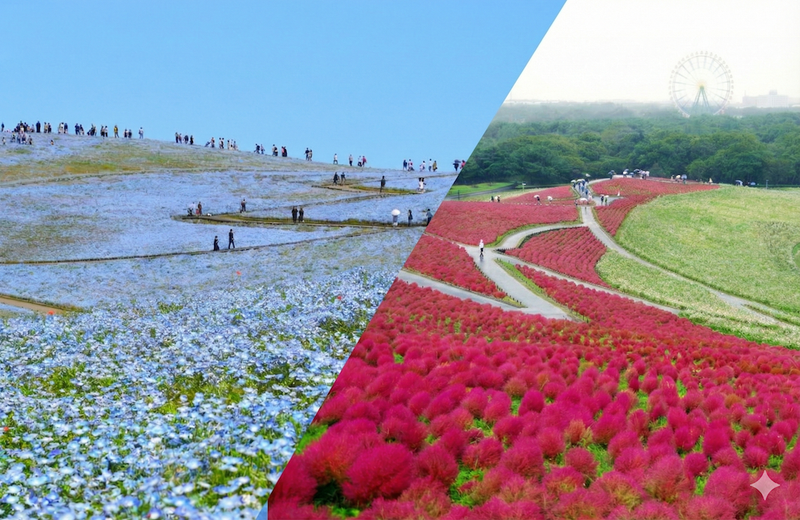
The same spot where the hill turns “blue” with Nemophila in spring transforms into a completely different “red” world in fall—it is this dramatic contrast that makes Hitachi Seaside Park a place you’ll want to visit twice a year.For a look at the spring scenery, please see the “Hitachi Seaside Park Nemophila 2026 Complete Guide .”
What is Kochia? How is it different from Nemophila?
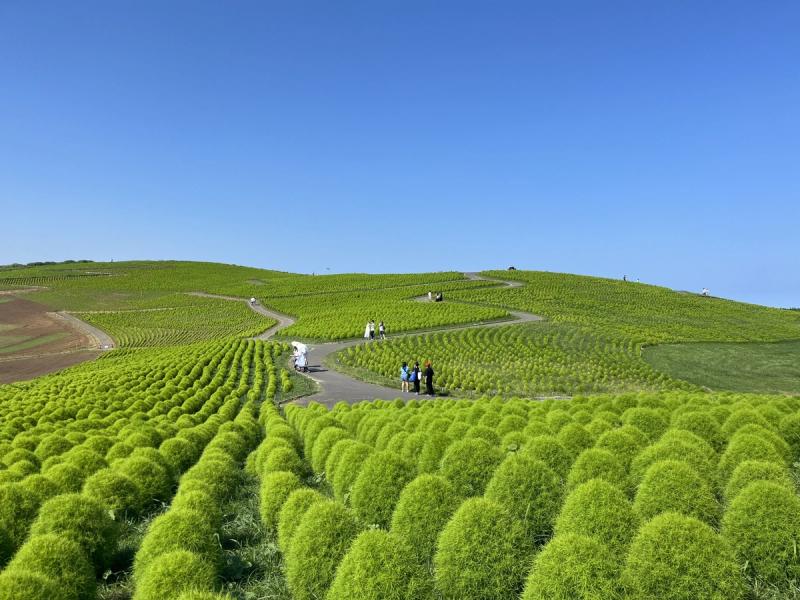
Kochia is a fluffy, spherical plant that appears vivid green in summer, but gradually changes color in the fall, turning deep red by October. Also known as “broom grass,” it is characterized by its round, adorable shape.
On the other hand, Nemophila is a plant that blooms with blue flowers in the spring (mid-April to early May). At Hitachi Seaside Park, you can enjoy completely different scenery depending on the season: “a spectacular view of blue” in the spring and “a spectacular view of red” in the fall.
Additionally, the park’s Kochia is an ornamental variety, and “Miharashi Hill,” the venue for the event, is the highest point within Hitachinaka City. From the top of the hill, you can see all the way to the Pacific Ocean.
[Latest for 2026] Kochia Fall Foliage Forecast & Color Change Calendar
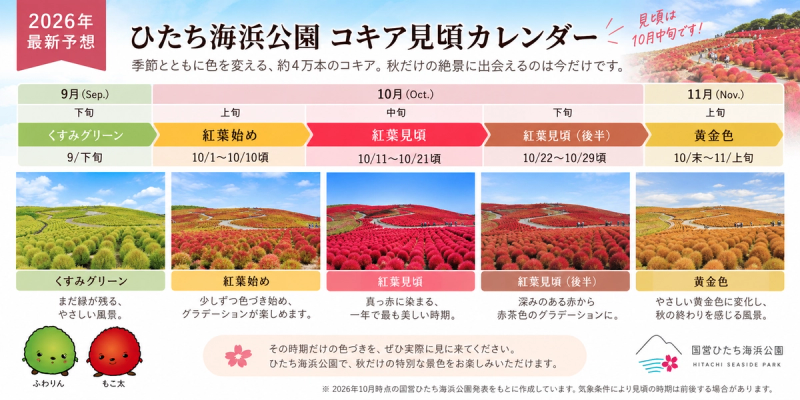
The most distinctive feature of Kochia is that its “color” changes completely depending on the season. Here is a guide to the expected color changes based on the park’s 2026 fall foliage forecast (as of October 2).
2026 Color Change Calendar (Official Forecast)
- ~Late September: Green Kochia — Fluffy green hills. A refreshing, summery landscape
- Around September 30–: Autumn Foliage Begins — A period of gradients shifting from green to red
- Around October 10–20: Peak Foliage — The best season when the entire hill is dyed crimson
- Around October 21–28: Peak Foliage (Second Half) — A gradient shifting from red to brown
- Around October 29–early November: Golden Kochia — A golden finale glistening in the evening sun
*Leaf-peeping forecasts are subject to change depending on future weather conditions. If cold temperatures or rainy weather persist, the foliage may peak earlier than usual.The duration of the peak foliage season (when the leaves are bright red) varies from year to year. Over the past five years, it lasted 6 days in 2021, 7 days in 2022 and 2023, 9 days in 2024, and 11 days in 2025.Since the peak lasts only about one week to 10 days, be sure to check the official website for the latest color updates before heading out.
Source: Hitachi Seaside Park Kochia
2026 Crowd Forecast Calendar
In addition to the fall foliage forecast, the park also releases daily crowd forecasts. The three-day weekend starting on Saturday, October 10—when the foliage is expected to reach its peak—and the following weekend (Saturday, October 17, and Sunday, October 18) are forecast to be “extremely crowded.”
2026 Kochia Crowd Forecast (Official, as of October 2)
| Crowd Level | Date |
|---|---|
| Extremely Crowded | October 10 (Sat) – 12 (Mon, Holiday), 17 (Sat) – 18 (Sun) |
| Busy | October 13 (Tue) – 16 (Fri), 19 (Mon) – 20 (Tue), 24 (Sat) – 25 (Sun) |
| Somewhat Crowded | October 3 (Sat) – 4 (Sun), 21 (Wed) – 23 (Fri), 26 (Mon) – 28 (Wed), 31 (Sat) – November 1 (Sun), November 3 (Tue, Holiday) |
| Not crowded | October 5 (Mon) – 9 (Fri), 29 (Thu) – 30 (Fri), November 2 (Mon) |
The best time to visit is on weekdays from October 5 (Mon) to 9 (Fri), just before the peak of the fall foliage season. Not only are these days expected to be “less crowded,” but admission fees will also be the standard rate since seasonal surcharges haven’t taken effect yet.If you want to leisurely enjoy the bright red hills, the days from Wednesday, October 21, to Friday, October 23—which fall toward the latter half of the peak season—are predicted to be “somewhat crowded” and are relatively easier to visit.
Please note that from Friday, October 9, through Tuesday, November 3 (a national holiday), seasonal rates apply, and admission for adults is 800 yen.
How to Enjoy the Park by Time of Day
- Early Morning to Mid-Morning: Soft red hues illuminated by the morning light. It’s less crowded, making it easier to take photos.
- Daytime: The striking contrast of vivid vermilion against the blue sky and the Pacific Ocean
- Dusk: Deep crimson hues tinged by the setting sun
Since the scenery changes depending on the time of day, it’s well worth visiting multiple times if you enjoy photography.
Green Kochia Light-Up | The 2026 event has concluded
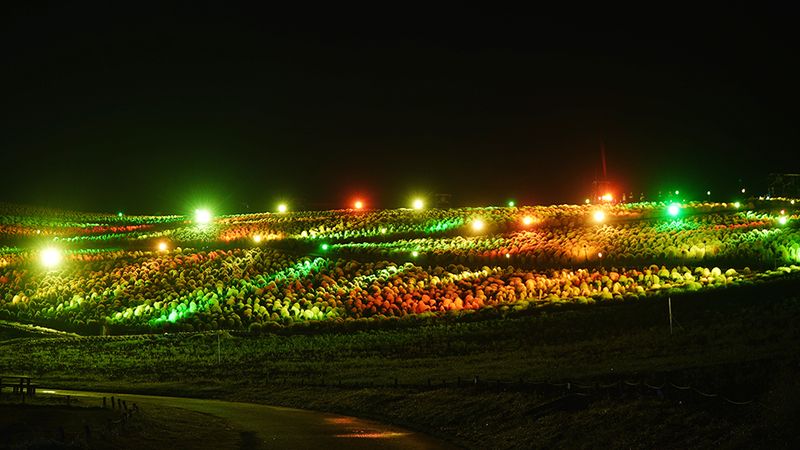
The “Kochia Light-Up,” which uses light and music to highlight the greenery before the fall foliage Kochia, is a limited-time event held only in September. In 2026, it took place from Friday, September 18, to Sunday, September 27, and has already concluded.
Marking the 20th anniversary of the plantings in 2026, the theme was “Starry Sky—A Radiance Connecting the Past to the Future.”At Miharashi Hill, approximately 40,000 Kochia trees were illuminated with a light show synchronized to five musical pieces. Visitors could also enjoy the debut laser show “Firefly Path” and the “Dome of Light” on the water stage.
The event is typically held from mid- to late September each year, and admission requires a separate fee in addition to the park entrance fee (1,000 yen in 2025). Information regarding next year’s event is usually announced on the official website around summer.
Please check the official website’s announcements for the latest event information.
[Must-Read for Drivers] Traffic-Avoidance Routes and Parking Lots During Peak Fall Foliage Season
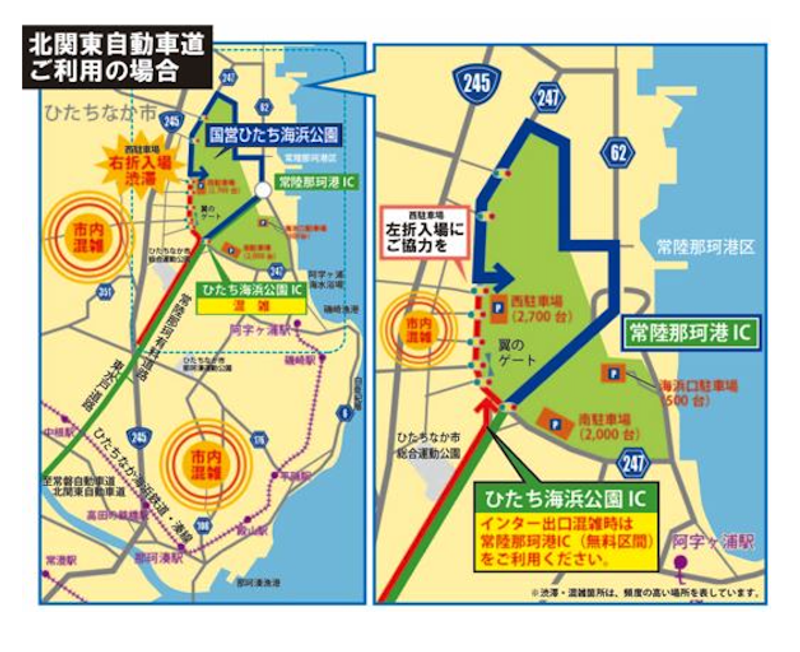
On weekends during the peak fall foliage season (mid- to late October), roads around the park become congested, and parking lots fill up by mid-morning. Instead of taking the “Hitachi Kaihin Park IC” route suggested by your car navigation system, you can more easily avoid traffic by taking the alternative route via “Hitachi-Naka Port IC,” which is used by locals.
Key Points
- Avoid Traffic Jams with the Alternative Route via Hitachi-Naka Port IC
- The West Parking Lot and Kaihin-guchi Parking Lot are closest to Miharashi Hill. However, from October 9 to 25, 2026, the Kaihin-guchi Parking Lot will be reserved for tour buses, so the West, South, and Temporary Parking Lots are recommended.
- Parking fee: 600 yen for standard-sized vehicles
- The golden rule is to arrive before the park opens at 9:30 a.m. It’s significantly less crowded on weekdays.
Detailed instructions on how to navigate the back route are explained in “Avoid Traffic Jams! Local Residents’ Guide to Back Roads & Parking Strategies ,” which we tested during the Nemophila period. Road conditions remain the same in the fall.
Additionally, on certain weekends during the peak fall foliage season, a “Park & Ride” service may be available, where you park at the temporary parking lot at Ajigaura Coast and take a free shuttle bus to the park (scheduled for October 11 and 12, 2025; parking fee: 500 yen).Please check the official announcements from Ibaraki Prefecture and the park to confirm whether this service will be available in 2026.
[Must-See for Train and Bus Riders] Take the Minato Line + Free Shuttle Bus to “Kaihama-guchi”
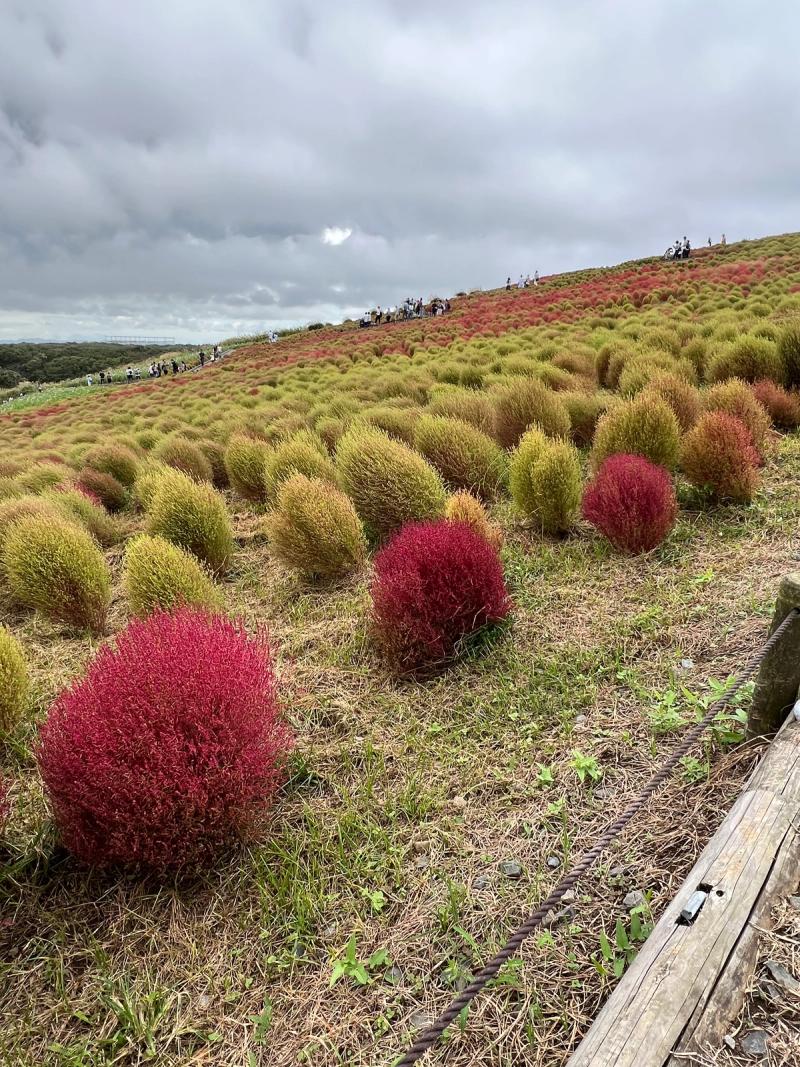
Kochia For train access during the season, locals recommend taking the local “Hitachinaka Kaihin Railway Minato Line.”
- Board the Minato Line from “Katsuta Station” on the JR Joban Line
- Get off at the terminal station, “Ajigaura Station” (approx. 28 minutes)
- Take the free “Kochia shuttle bus” from in front of the station to the park’s “Kaihama Entrance” (approx. 9 min). In 2026, the shuttle will run on Saturdays, Sundays, and holidays from October 3 to 31
- The Kaihin Entrance is the closest entrance to Miharashi Hill. It’s about a 10-minute walk to Kochia Hill
In 2026, the Kochia shuttle bus will operate on Saturdays, Sundays, and holidays from October 3 (Sat) to October 31 (Sat).Operating hours are from 9:00 AM to 5:00 PM, with connections to all trains arriving at and departing from Ajigaura Station. The trip from Katsuta Station takes about 40 minutes, including transfers (on October 3 and 4, the bus will go to the South Exit due to the closure of the Kaihin Exit).The shuttle bus does not operate on weekdays, so if you’re visiting on a weekday, please use the local bus from Katsuta Station (bound for the West Exit or South Exit; approximately 15–20 minutes). On weekends during the peak fall foliage season, you may encounter long lines for local buses or traffic congestion, but the Minato Line route avoids traffic jams and lets you enjoy the atmosphere of a local journey from the train window.
The Minato Line also offers a one-day pass that includes admission to Hitachi Seaside Park.During the seasonal fare period (October 9–November 3), the price is 1,700 yen for adults; outside this period, it is 1,400 yen for adults. This ticket allows you to enter the park without waiting in line to buy an admission ticket. For details, please see “ Minato Line One-Day Free Pass with Hitachi Seaside Park Admission Ticket.”
*IC cards such as Suica and PASMO cannot be used on the Minato Line (cash and select QR code payments only). Also, there is no parking available near Ajigaura Station. Please do not park on the street near the station under any circumstances.
Right next to Ajigaura Station is “Hoshiimo Shrine ,” lined with golden torii gates. It’s a popular photo spot on social media that you can visit while waiting for the return shuttle bus.
Scenic Spots and Photography Tips at Miharashi Hill
Miharashi Hill is the main attraction of the park, where approximately 40,000 Kochia trees are planted. The gradient of colors created by the blue of the sky, the azure of the Pacific Ocean, and the red of the Kochia trees looks just like a painting.
Best Angles for Photography
- A panoramic view from the top of the hill — the classic composition featuring the Pacific Ocean stretching out beyond the red hill
- The walking path through Kochia — A low-angle shot where you’re enveloped by fluffy red foliage
- The contrast between the blue sky and Kochia — The colors stand out when you use a low angle to include a large portion of the sky
In 2026, approximately 2.7 million yellow cosmos flowers will bloom from the base to the middle of the hill, offering a chance to capture the combination of red Kochia and yellow flowers.The “Welcome Garden” (from the Miharashi Hill entrance to the area around the First Summit), which has doubled in size, is also a highlight. When taking photos, please follow the rule of staying on the paths and not entering the flower beds.
Three Golden Rules for a Comfortable Visit
Hitachi Seaside Park is vast—about 41 times the size of the Tokyo Dome. While Miharashi Hill alone is compact enough to explore on foot, securing a means of transportation is key to fully enjoying the park.
1. Rent a bike to cover a wide area
- Fees: 600 yen for 3 hours; 100 yen for every 30 minutes thereafter. One-day pass: 800 yen (excluding peak seasons)
- Rental Locations: Cycle Centers at the West Entrance, Central Area, South Entrance, and Seaside Entrance
- The park’s cycling course (approx. 13 km) is free of traffic lights and cars, making for a refreshing ride
In the fall, the heat subsides, making it the best season for cycling. You can efficiently visit Kochia → Cosmos → the Giant Ferris Wheel.
2. Using the Seaside Train (Park Shuttle Bus)
For those who aren’t comfortable riding bicycles, families with small children, and seniors, we recommend the “Seaside Train” for getting around the park.
- Fare: 500 yen per ride
- Circles major attractions; one loop takes about 40 minutes
3. Leave the Park Early for Lunch at “Nakaminato Osakana Ichiba”
While there are restaurants and food stalls inside the park, wait times can be long during peak hours. A plan recommended by locals is to fully enjoy Kochia in the morning, leave the park early, and head to Nakaminato Osakana Ichiba—about a 15-minute drive away—to enjoy a seafood lunch.The market gets crowded after 11:30 a.m., so it’s best to head out early.
👉Nakaminato Osakana Ichiba Complete Guide | Enjoy Fresh Seafood and a Stroll Through the Harbor Town
Fall Special! Savor Kochia Culinary Delights
Marukoro Kochia Soft Serve (500 yen each)
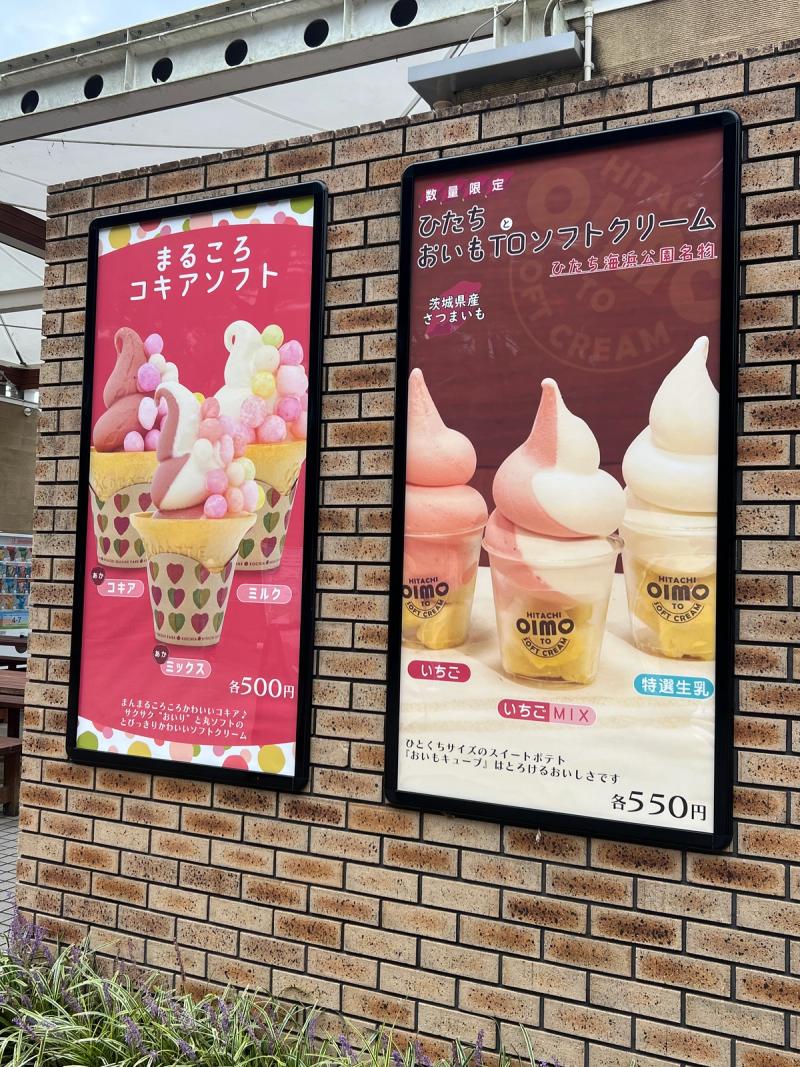
A cute soft-serve ice cream shaped to resemble the round form of Kochia. The crispy texture of the “Oiri” topping is a popular favorite.
Flavors:
- Matcha-Flavored Kochia
- Mellow Milk Flavor
- Mixed Flavor
Kochia Latte (680 yen)
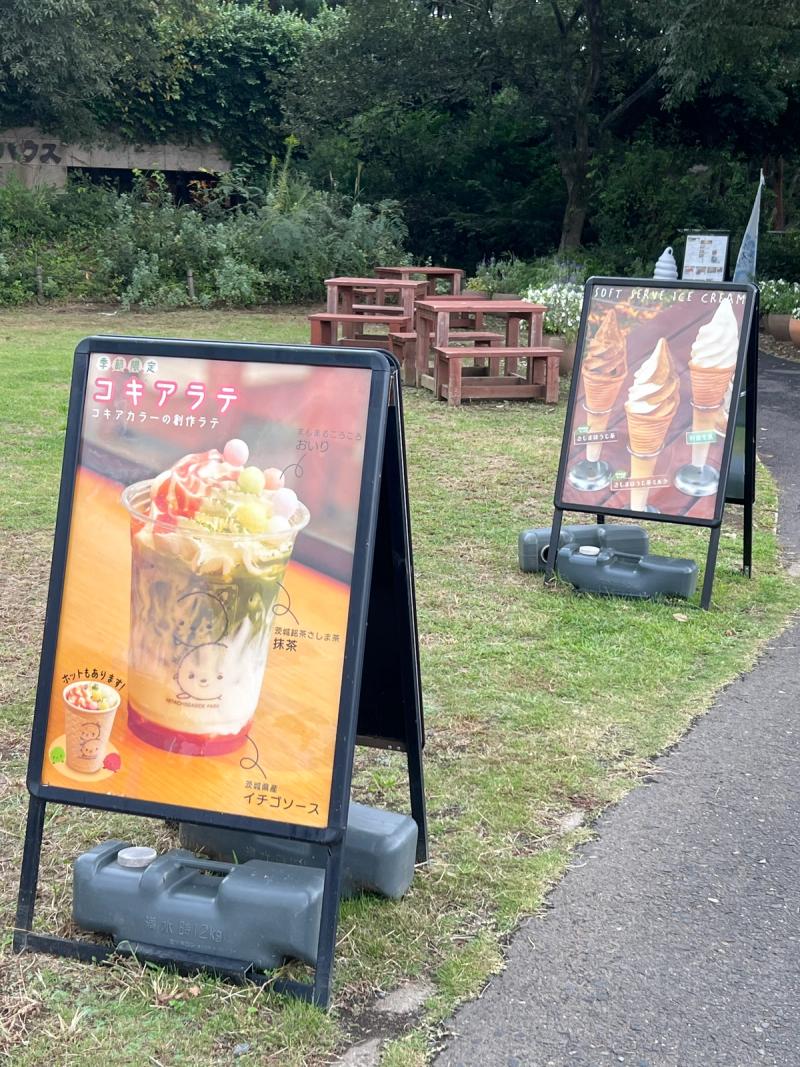
A photogenic drink featuring matcha and strawberry sauce to evoke the autumn foliage of Kochia. This fall-limited drink is perfect for social media.
Other Recommended Dishes
- Grilled Ham: A specialty of Kaihin Park—Go-ura Ham Hitachi Seaside Park
- Local Drink: Sold at food stalls
- Food-on-the-Go Spots: Scattered throughout the park
The 2026 Kochia Carnival will also feature the Marukoro Kochia Soft Serve and Kochia Latte. You can also enjoy the park’s original coffee blend, “Kochia Blend.”*Prices are for reference based on the 2025 season. Please check the official website for the latest menu and prices.
“+α” Spots to Enjoy Beyond Kochia
Autumn Flowers in Bloom During the Same Period
- Yellow Cosmos: Approximately 2.7 million plants at the base and mid-slope of Miharashi Hill. Peak viewing is from early to late October
- Welcome Garden: In 2026, the area will double in size, with approximately 40,000 plants of 31 varieties welcoming visitors (peak viewing season lasts until late October)
- Fall Roses & Pampas Grass: The fall roses at Hitachi Rose Garden are at their best from late October to early November. Pampas grass, reaching heights of 2–3 meters, also grows around the Great Grassland
Ferris wheel and attractions (ideal for families with children)
Pleasure Garden Area
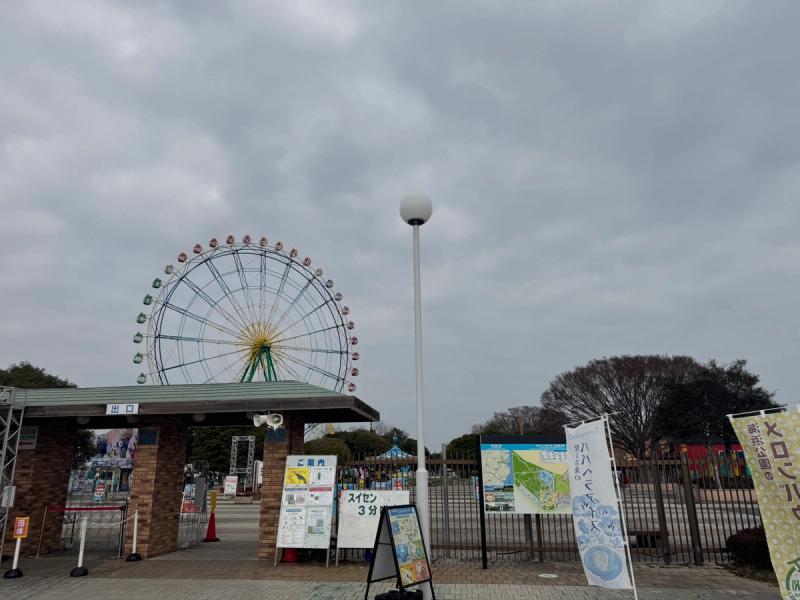
- Giant Ferris Wheel (100 m high): Panoramic views of the crimson-hued hills and the Pacific Ocean
- Forest Adventure Playground: Free to play
Even if the kids get bored, there are play areas, so families can enjoy a full day here.
Tour of nearby spiritual spots
- Sakatsura Isosaki Shrine : A tunnel of 300-year-old trees and a breathtaking view of the ocean. Ajigaura: Close to the station
- Oarai Isosaki Shrine : The “Kamiso Torii” Standing in the Sea. About a 20-minute drive
Fall Attire & What to Bring
Be Mindful of the “Sea Breeze” in Hitachinaka in October
While daytime temperatures are comfortable at around 20°C, mornings and evenings can drop to near 10°C on some days. Since the park is near the ocean, the wind is colder than you might expect, so it’s a good idea to bring an extra layer to throw on. Because there are hills to climb, comfortable walking shoes—such as sneakers—are a must.
List of Useful Items to Bring
- A windbreaker or other wind-resistant jacket
- Hat and sunscreen (the midday sun is still quite strong)
- Drinks (vending machines inside the park may sell out during peak times)
- Power bank (your phone battery will run out if you take lots of photos)
- Picnic blanket (for taking a break on the grass)
Avoid traffic jams on the way home! The best times to leave the park
On weekends when the fall foliage is at its peak, the parking lot exits and surrounding roads get congested around 2:00 PM to 4:00 PM. We recommend one of two options: either enjoy the park to the fullest in the morning and leave shortly after noon, or take your time and stay until just before closing in the evening. At dusk, Kochia is bathed in a deep crimson hue, making this time of day a hidden gem.
If you’re driving, 👉 please also check out our traffic-avoidance routes and parking tips.
Access, Hours, and Admission Fees
Access
- By Train: About 15–20 minutes by bus from “Katsuta Station” on the JR Joban Line, or by free shuttle bus from “Ajigaura Station” on the Minato Line (operating only on Saturdays, Sundays, and holidays in October 2026)
- By Car: Right off the Kita-Kantō Expressway at “Hitachi Seaside Park IC” (During traffic congestion, we recommend taking the route via Hitachi-Naka Port IC)
Hours & Closed Days
- Park Hours: 9:30 AM–5:00 PM (until 4:30 PM from November 1–3)
- Closed: Every Tuesday (or the following weekday if Tuesday is a public holiday). However, during the Kochia Carnival period (September 18–November 3, 2026), the park will be open daily except Tuesday, September 29
Admission Fees
- Adults (high school students and older): 450 yen; Seniors (65 and older): 210 yen; Middle school students and younger: Free
- During the seasonal rate period (October 9–November 3, 2026), adults: 800 yen; seniors: 560 yen
- Parking: 600 yen for passenger cars, 300 yen for motorcycles, 1,800 yen for large vehicles
Please check the official website for the latest information.
We Recommend Staying Overnight | Arrive First Thing in the Morning at the Red Hill
If you stay overnight, you’ll have the “morning before the crowds” all to yourself
If you’re making a day trip from Tokyo, you’ll likely arrive around 10:00 a.m. If you stay near the park the night before, you can experience the most beautiful Kochia, bathed in the morning light, during the quiet hours right after the park opens.In 2026, the three-day weekend from October 10–12 and the weekend of October 17–18 are expected to be “extremely crowded.” If you’re planning to visit on these dates, it’s best to stay overnight and head to the hill first thing in the morning.
At the vacation rental I manage, we’re seeing an increase in guests staying the night before during the Kochia season—all because they want to head to the hill first thing in the morning.
Recommended Accommodation Areas
- Within Hitachinaka City: Within a 10-minute drive of the park
- Ajigaura and Hiraiso: Accommodations along the coast offer easy access to the Minato Line and shuttle buses
- Oarai Town: Many hot spring inns, and convenient for sightseeing in Oarai the next day
👉 [2026 Update] 9 Recommended Accommodations for Families with Children Near Hitachi Seaside Park
👉 [Updated for 2026] Recommended Pet-Friendly Accommodations Near Hitachi Seaside Park
👉 [2026 Edition] 11 Accommodations Near Hitachi Seaside Park Where You Can Have a BBQ
👉 10 Budget-Friendly Hotels and Affordable Accommodations Near Hitachi Seaside Park
Summary: Tips for a Comfortable Visit to Kochia
Hitachi Seaside Park’s Kochia is one of Japan’s most iconic autumn sights. Here are three tips for enjoying it comfortably.
- The peak viewing period for 2026 is expected to be from around October 10 to October 20. If you want to avoid the “extremely crowded” periods of October 10–12 and 17–18, weekdays are recommended. Check the color progress on the official website before you leave
- If traveling by car, take the “Hitachi-Naka Port IC” to arrive first thing in the morning; if traveling by train, take the “Minato Line plus the free shuttle bus” to the Kaihin-guchi exit
- On weekends during peak foliage season, the best strategy is to stay overnight and aim for the early morning hours
And in the spring, the same hills are dyed a vivid blue by approximately 5.3 million Nemophila flowers. If you’re moved by the reds of autumn, the next stop is the blues of spring. Be sure to check out the “Hitachi Seaside Park Nemophila 2026 Complete Guide ” as well.
This fall, take a stroll through the hills ablaze with fiery reds and discover your very own Japanese autumn.